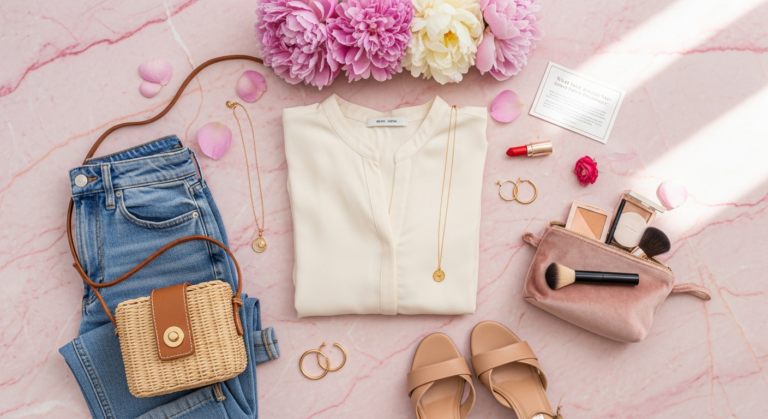
how to find your personal style guide

How to Find Your Personal Style: The Ultimate 2026 Guide to Authentic Self-Expression

Have you ever stood in front of a closet bursting with clothes and felt like you had absolutely nothing to wear? It is one of the most common frustrations in the modern fashion landscape. We live in an era of “core-this” and “aesthetic-that,” where trends move at the speed of a TikTok scroll. By the time you’ve invested in a look, the cultural zeitgeist has already moved on. But here is the secret that the most stylish women in the world know: fashion is fleeting, but style is eternal.

Finding your personal style is not about following a shopping list or mimicking a celebrity; it is about self-discovery. It is the visual bridge between who you are on the inside and how you present yourself to the world. In 2026, the shift is moving away from mass consumption and toward “intentional curation.” We are reclaiming our wardrobes as personal sanctuaries of confidence. This guide will walk you through the psychological and practical steps to uncovering your unique fashion DNA, ensuring that every time you get dressed, you feel like the most authentic version of yourself.

1. The Wardrobe Audit: Separating Your “Real Life” from Your “Fantasy Self”

The journey to personal style begins not in a store, but in your own closet. Most women only wear about 20% of their wardrobe 80% of the time. The goal of a wardrobe audit is to understand why that 20% is working and why the rest is gathering dust.

Start by pulling everything out. As you look at each piece, ask yourself: *When was the last time I wore this? How did I feel in it?* We often fall into the trap of buying for our “fantasy self”—the version of us that goes to gala dinners every week or lives in a tropical climate when we actually work in a temperate city office. To find your style, you must embrace your reality.

Create three piles:
* **The Power Pieces:** Items you wear constantly and feel incredible in. These are the blueprints of your style.
* **The “Why Not?” Pile:** Items you like but never wear. Is it a fit issue? A styling issue? Or does it simply not belong in your life?
* **The Departures:** Items that no longer fit your body, your lifestyle, or your spirit.

Analyze the “Power Pieces.” Are they mostly structured? Are they soft and oversized? Do they share a color palette? This data is the first clue in your style investigation. By 2026 standards, a successful wardrobe isn’t measured by volume, but by the utility and joy each piece brings to your daily routine.

2. Beyond the Algorithm: Cultivating Inspiration with Intention

In the digital age, we are bombarded with algorithmic suggestions. While Pinterest and Instagram are great tools, they can lead to a “homogenized” style where everyone looks like a variation of the same influencer. To find *your* style, you need to look beyond the immediate feed.

Expand your inspiration sources to include:
* **Cinema and History:** Look at the costumes in your favorite films. Are you drawn to the sharp tailoring of 1940s noir or the effortless bohemianism of the 1970s?
* **Architecture and Nature:** If you love minimalist, Brutalist architecture, your style might lean toward structured, monochromatic silhouettes. If you are drawn to English gardens, you might prefer florals, lace, and soft textures.
* **The “Lobby” Test:** Imagine you are sitting in a high-end hotel lobby. Who is the woman whose outfit makes you lean in? Is she wearing a sleek silk suit or a vintage leather jacket with denim?

In 2026, we are seeing a resurgence of “Eclectic Nostalgia”—the blending of different eras to create something entirely new. Save images that provoke an emotional response, not just a “that looks nice” thought. Once you have 20–30 images, look for the common threads. You’ll likely see a pattern emerge that the algorithm couldn’t have predicted for you.

3. The Science of Style: Understanding Silhouette, Color, and Texture

While style is an art, it is built on a foundation of visual science. Understanding how lines, colors, and fabrics interact with your body is a game-changer.

**Silhouette and Proportion:**
Every body is a masterpiece, and clothes are the frame. Rather than dressing to “hide” parts of yourself, dress to highlight what you love. Are you a fan of the “big top, small bottom” look, or do you prefer a defined waist? In 2026, the trend is moving toward “fluid tailoring”—clothes that move with the body rather than constricting it. Experiment with different proportions to see what makes you feel most balanced.

**The Power of Palette:**
Color theory is more than just “Am I a Summer or a Winter?” It’s about how color affects your mood and your skin’s radiance. You don’t have to wear every color of the rainbow. Many of the world’s most stylish women stick to a core palette of neutrals (navy, cream, camel, black) and add one or two “signature” colors that pop.

**Texture as a Language:**
Texture is often the missing ingredient in a personal style guide. A monochromatic outfit in all cotton looks flat, but a monochromatic outfit mixing silk, wool, and leather looks sophisticated and expensive. Texture adds depth and tells a story about your personality—rougher textures like tweed and denim suggest ruggedness and practicality, while silks and cashmeres suggest refinement.

4. The Three-Word Method: Defining Your Style Identity

One of the most effective ways to solidify your personal style is to distill it into three descriptive words. This method, popularized by stylists and refined for the 2026 fashion landscape, acts as a filter for every future purchase and outfit combination.

How to find your three words:
1. **The Practical Word:** This describes the reality of your style. Words like *Polished, Oversized, Tailored,* or *Casual.*
2. **The Aesthetic Word:** This describes the “vibe.” Words like *Edgy, Romantic, Minimalist, Vintage,* or *Sporty.*
3. **The Emotional Word:** This describes how you want to feel. Words like *Powerful, Whimsical, Effortless, Mysterious,* or *Approachable.*

For example, if your words are “Tailored, Edgy, and Effortless,” you might pair a sharp blazer with distressed jeans and a simple white tee. If you see a beautiful floral sundress in a store, you can run it through your filter. Is it tailored? No. Is it edgy? No. Even if it’s a “pretty” dress, it doesn’t fit *your* style, so you can confidently pass it by. This prevents the “closet full of nothing to wear” syndrome by ensuring every piece aligns with your core identity.

5. Building a Signature: The Concept of the “Uniform”

A “signature style” doesn’t mean wearing the exact same thing every day, but it does mean having a go-to formula that always works. Think of it as your fashion “North Star.”

In 2026, the “Uniform” has evolved. It’s no longer about a boring suit; it’s about a combination of items that make you feel invincible. Your uniform might be:
* Wide-leg trousers + a tucked-in knit + pointed-toe boots.
* A slip dress + an oversized blazer + sneakers.
* High-waisted denim + a crisp button-down + statement jewelry.

Having a uniform reduces decision fatigue. When you’re having an “off” day or are in a rush, you can fall back on your signature look knowing it represents you perfectly. As you become more comfortable with your style, you can iterate on this uniform—changing the colors or textures while keeping the silhouette that makes you feel confident.

6. Conscious Curation: Shopping with a 2026 Mindset

The final step in finding your personal style is learning how to shop for it. In 2026, the “fast fashion” craze has been replaced by “Slow Style.” This means buying less, but buying better.

When considering a new addition to your wardrobe, use the **Rule of Three**:
1. Can I think of at least three different ways to style this with items I already own?
2. Can I wear this to at least three different types of occasions?
3. Will I still want to wear this in three years?

Personal style is a long-term investment. Focus on high-quality materials like organic cotton, traceable wool, and recycled silk. These fabrics not only last longer but they drape better on the body, immediately elevating your look. Remember, a personal style guide is a living document. It will evolve as you grow, but the foundation of quality and authenticity should remain constant.

***

FAQ: Frequently Asked Questions

**Q1: How do I find my style if I like multiple, conflicting aesthetics?**
It is perfectly normal to be drawn to different styles! The key is to blend them. If you love both “Grungy Rocker” and “Classic Ladylike,” your personal style might be the tension between the two—like wearing a leather biker jacket over a pearl-embellished midi dress. This “style friction” is often what makes a look unique and memorable.

**Q2: Can I find my personal style on a tight budget?**
Absolutely. Style has nothing to do with price tags. Some of the best personal style is forged in thrift stores and vintage shops, where you find one-of-a-kind pieces that aren’t available in mass-market malls. Focus on fit and fabric. A $20 thrifted wool blazer that is tailored to your body will always look better than a $200 polyester blazer that doesn’t fit well.

**Q3: How often should I update my personal style guide?**
Think of your style as a garden—it needs regular weeding and occasional new planting. Do a “mini-audit” at the start of every season. As you move through different stages of life (new career, motherhood, moving to a new city), your style will naturally shift. Embrace the evolution while staying true to your “three words.”

**Q4: I feel like I’m too old/young for certain styles. How do I navigate age and style?**
In 2026, the “rules” about age-appropriate dressing are largely obsolete. Style is about energy, not a birth year. If a mini-skirt makes you feel confident and aligns with your aesthetic, wear it. The most stylish women are those who dress for their own joy rather than societal expectations. Confidence is the ultimate age-defier.

**Q5: What is the biggest mistake people make when trying to find their style?**
The biggest mistake is trying to “buy” a style overnight. People often see a look they like and buy the entire outfit from a single store window. This results in a “costume” rather than a style. True personal style is built piece by piece over time, mixing old and new, high and low, to create a look that belongs only to you.

***

Conclusion: The Confidence of Knowing Yourself

Finding your personal style is one of the most empowering journeys you can take. It is an act of self-care that pays dividends every single morning when you look in the mirror. By moving away from the frantic cycle of trends and toward a curated, intentional wardrobe, you aren’t just changing your clothes—you’re changing how you move through the world.

As we navigate 2026, remember that the most stylish thing you can wear is authenticity. Use the tools in this guide—the wardrobe audit, the three-word method, and the science of silhouette—to build a framework, but always leave room for play. Your style is a conversation between you and the world; make sure you’re saying exactly what you mean. Happy styling!