
Mastering the Digital Drape: How to Identify Fabric Quality When Shopping Online
The modern fashion landscape has undergone a seismic shift, moving from the tactile halls of brick-and-mortar boutiques to the high-definition galleries of the digital world. While online shopping offers unparalleled convenience and access to global trends, it presents a significant challenge: the inability to touch. For the fashion-conscious consumer, the “hand feel”—that immediate sensory feedback of softness, weight, and texture—is often the deciding factor in a purchase. When you can’t run your fingers across a lapel or test the spring of a knit, how do you ensure the garment arriving on your doorstep matches your high standards?
Navigating this digital frontier requires a new set of skills. It’s about becoming a “fabric detective,” learning to decode technical specifications, scrutinize photography, and interpret brand transparency. Quality isn’t just about a label; it’s about the longevity of the fibers, the integrity of the weave, and the way the garment interacts with light and movement. This guide is designed to empower you with the knowledge to “feel” fabric through your screen, ensuring your curated wardrobe remains an investment in style and substance rather than a collection of fast-fashion disappointments.
1. Decoding Fiber Composition: The DNA of Quality
The first and most reliable indicator of quality is the composition tag found in the product description. In the digital space, the “Materials” section is your blueprint. High-quality garments typically lean heavily on natural fibers or high-performance, conscious synthetics.
**Natural Fibers: The Gold Standard**
When shopping for staples, look for 100% compositions. A 100% organic cotton t-shirt will almost always outperform a cotton-poly blend in terms of breathability and how it ages. However, not all natural fibers are created equal. Look for “long-staple” or “extra-long-staple” cotton (such as Pima or Supima), which indicates longer fibers that result in a smoother, stronger yarn that resists pilling. For knitwear, “Grade A” cashmere or “merino wool” suggests a finer micron count, meaning the wool is softer and less likely to itch.
**The Role of Blends**
Blends aren’t always a sign of cost-cutting. Sometimes, they are intentional. A touch of elastane (1-5%) in denim or tailored trousers provides necessary recovery and comfort. A silk-cotton blend offers the sheen of silk with the structural integrity of cotton. However, be wary of high percentages of acrylic or low-grade polyester in items marketed as “luxury.” If a sweater is 70% acrylic but priced like pure wool, the quality likely won’t justify the investment.
2. Understanding GSM and Fabric Weight
One of the most underutilized pieces of information in online descriptions is the “GSM” (grams per square meter) or “weight” of the fabric. This metric tells you exactly how dense or thin the material is, providing a virtual “heft” to the garment.
* **Lightweight (Under 150 GSM):** Ideal for summer linen shirts, silk camisoles, and delicate layering pieces. If a white t-shirt is under 130 GSM, it will likely be somewhat sheer—a crucial detail if you’re looking for an opaque professional look.
* **Medium Weight (150–250 GSM):** This is the sweet spot for high-quality t-shirts, button-downs, and lightweight dresses. It offers enough structure to hold a silhouette without being cumbersome.
* **Heavyweight (Above 250 GSM):** Look for this in hoodies, winter trousers, and “heavy” cotton tees. High GSM in cotton often translates to a “dry” hand feel and a crisp, architectural drape that looks significantly more expensive than its flimsy counterparts.
When a brand lists the weight, it shows they are confident in the material’s substance. If the weight isn’t listed, look for descriptors like “double-knit,” “heavy-gauge,” or “3-ply,” which all hint at a denser, more durable construction.
3. Visual Clues: Analyzing Shine, Drape, and Texture
Since you can’t touch the fabric, you must use the photographer’s lighting to your advantage. High-quality fabrics interact with light in specific ways that are hard to fake.
**The Sheen Test**
Natural silk has a soft, multidimensional glow that seems to come from within. Conversely, cheap synthetic satins often have a “plastic” or “tinny” shine that looks harsh under studio lights. If a garment looks overly reflective or “slippery” in a photo, it is likely a low-grade polyester. For matte fabrics like cotton or linen, look for a consistent texture. If you see “fuzziness” or tiny loose fibers in the high-res zoom, the garment may already be showing signs of pilling before it has even been worn.
**The Drape and Movement**
Watch the videos. Many high-end retailers now include a “catwalk” or “model in motion” clip. Pay attention to how the fabric folds when the model walks. Does it flow like liquid (high-quality viscose or silk), or does it “crunch” and hold stiff, awkward angles (stiff synthetic blends)? Look at the hemline—if it ripples or “waves” unevenly, the fabric might be too thin or poorly tensioned during the sewing process.
4. Construction Details Revealed by the Zoom Tool
Quality fabric is almost always paired with quality construction. By using the zoom tool to inspect the seams and edges, you can infer the quality of the textile itself.
**Pattern Matching and Seams**
Check the seams on patterned garments (stripes, plaids, or florals). If the pattern aligns perfectly at the seam, the brand has invested in extra fabric and precision cutting—a hallmark of high-quality production. Furthermore, look for “French seams” or “bound seams” on the interior of sheer garments. If you can see messy, overlocked (serged) edges through a blouse, the fabric is likely a mass-produced, lower-quality variant.
**Edge Finishing**
Look at the hems and necklines. A high-quality jersey t-shirt will often have a “double-needle” stitch at the hem to prevent rolling. On silk scarves or high-end dresses, look for hand-rolled hems or “blind” hems where the stitching is nearly invisible. These details suggest that the fabric was treated with the respect that high-quality materials deserve.
5. Sustainability Certifications as Proxies for Quality
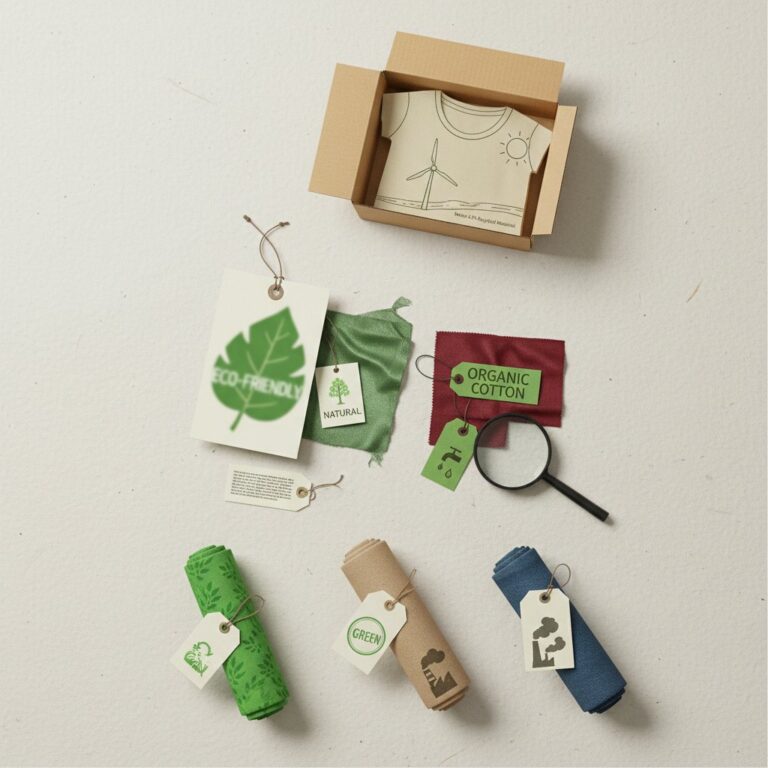
In the current fashion era, sustainability and quality are increasingly linked. Fabrics that are certified by third-party organizations often undergo more rigorous testing for fiber strength, colorfastness, and chemical use.
* **GOTS (Global Organic Textile Standard):** This ensures the cotton is not only organic but also processed to a high standard of durability.
* **OEKO-TEX Standard 100:** This certifies that every component of the garment is free from harmful substances. Fabrics that meet this standard tend to be gentler on the skin and are often of a higher grade.
* **LWG (Leather Working Group):** If you are buying leather online, look for an LWG rating (Gold or Silver). This indicates the leather was processed in a way that maintains the integrity of the hide, ensuring it will develop a beautiful patina rather than cracking over time.
When a brand invests in these certifications, they are usually sourcing textiles that are built to last, rather than disposable, seasonal fabrics.
6. The “Review Mining” Strategy
Customer reviews are the closest you will get to a physical touch-test. However, you must read between the lines. Don’t just look at the star rating; look for specific “tactile” keywords.
**Keywords to Look For:**
* **”Scratchy” or “Itchy”:** A red flag for low-quality wool or poorly processed synthetics.
* **”Substantial” or “Weighty”:** High praise for cotton and knits, indicating a high GSM.
* **”Pilled after one wash”:** A sign of short-staple fibers or loose knitting.
* **”See-through”:** Essential for white garments; indicates the fabric lacks density.
Also, look for user-uploaded photos. Studio lighting is designed to make everything look perfect, but a “real life” photo from a customer will show how the fabric actually wrinkles, how it catches lint, and how it hangs on a non-model body.
***
FAQ: Navigating Fabric Quality Online
**Q1: Is “Vegan Leather” actually high quality?**
“Vegan leather” is a broad term. Most affordable versions are simply PU (polyurethane) or PVC, which can feel plastic-like and don’t breathe. However, newer high-end alternatives made from pineapple (Piñatex) or mushrooms (Mylo) can be very high quality. If the description just says “100% synthetic leather,” expect a shorter lifespan than real leather.
**Q2: How can I tell if a white shirt will be opaque?**
Look for the weight (GSM). For a truly opaque white cotton shirt, you want a weight of at least 170–200 GSM. Additionally, check for a “back-view” photo; if you can clearly see the waistband of the model’s trousers through the shirt, it’s sheer.
**Q3: Does a higher price always guarantee better fabric?**
Not necessarily. Many luxury “hype” brands use standard cotton jersey for hoodies and tees while charging a premium for the logo. Always check the material composition first. A $50 t-shirt from a transparent, fabric-focused brand is often superior to a $300 designer t-shirt made of standard combed cotton.
**Q4: What does “mercerized cotton” mean?**
Mercerization is a chemical treatment for cotton that increases its luster and its ability to take dye. Mercerized cotton feels smoother, looks more like silk, and is more resistant to pilling, making it a high-quality indicator for knitwear and polo shirts.
**Q5: Why does some linen feel “crunchy” online?**
Linen is naturally stiff because of its flax fibers. High-quality online retailers will often “garment wash” their linen to soften it before it reaches you. Look for the terms “European Flax” or “Belgian Linen,” which are industry markers for the highest quality, longest-lasting linen fibers.
***
Conclusion: Developing Your Virtual Touch
Shopping for fashion online doesn’t have to be a gamble. By shifting your focus from the aesthetic of the outfit to the technical details of the textile, you can curate a wardrobe that feels as good as it looks. Remember that quality is found in the details: the micron count of a wool sweater, the GSM of a cotton tee, and the way a silk slip dress catches the light in a 5-second video clip.
As we move forward into a future where digital browsing is the norm, the most stylish individuals will be those who treat the “Product Specifications” tab with as much interest as the “New Arrivals” gallery. Use these indicators to filter out the noise and invest in pieces that offer longevity, comfort, and a true sense of luxury. By mastering the art of identifying fabric quality without touching, you aren’t just shopping; you are building a tactile legacy of style that stands the test of time.